
Tile & Stone in Utah County
Why Choose Tile or Stone?
Tile has been around for centuries for a reason. It’s beautiful, long-lasting, very customizable, and works on floors, walls, or as decorative accent pieces. Done correctly, tile provides a high-end feel that can withstand moisture and heavy traffic for years to come.
That said, not all tile is made equal. There’s a lot of variety in what tile is made of, what it costs, and where it should be used — so it pays to be well informed before you choose.
Ceramic, Porcelain & Stone
There are two types of manmade tile, ceramic and porcelain. Both are made by baking clays, but porcelain is fired at higher temperatures for longer, making it denser, more durable, and more water resistant. Both can be printed to achieve a wide range of looks — wood, stone, metal, concrete, fabric, and more. Natural stone is quarried rather than manufactured, so every piece is one of a kind.
Ceramic
An affordable, versatile tile for floors, walls, and backsplashes, with a protective outer coating.
Benefits:
- Water resistant – the protective coating makes ceramic water and stain resistant
- Easy maintenance – simply sweep and wipe clean; it resists stains and scuffs
- Durable – tough and difficult to chip, lasting 10–20 years when professionally installed
- Easy to repair – if a single tile does break, it’s simple and inexpensive to replace

Porcelain
Denser and tougher than ceramic, porcelain is the go-to choice for bathrooms, kitchens, and mudrooms.
Benefits:
- Durable – perfect for high-traffic homes and businesses, lasting 10–20 years when installed correctly
- Beautiful – better materials and a more elaborate manufacturing process give it a luxurious look and feel
- Water & stain resistant – easy to maintain in wet, busy rooms

Natural Stone
A timeless, one-of-a-kind look that adds value and is unaffected by changing trends.
Benefits:
- Adds value & beauty – raises property value with a look that never goes out of style
- Durable – one of the most durable flooring options available
- Easy to maintain – easy to clean, and it doesn’t hold onto pet hair or allergens
- Great with radiant heat – conducts heat well, and stays naturally cool in summer
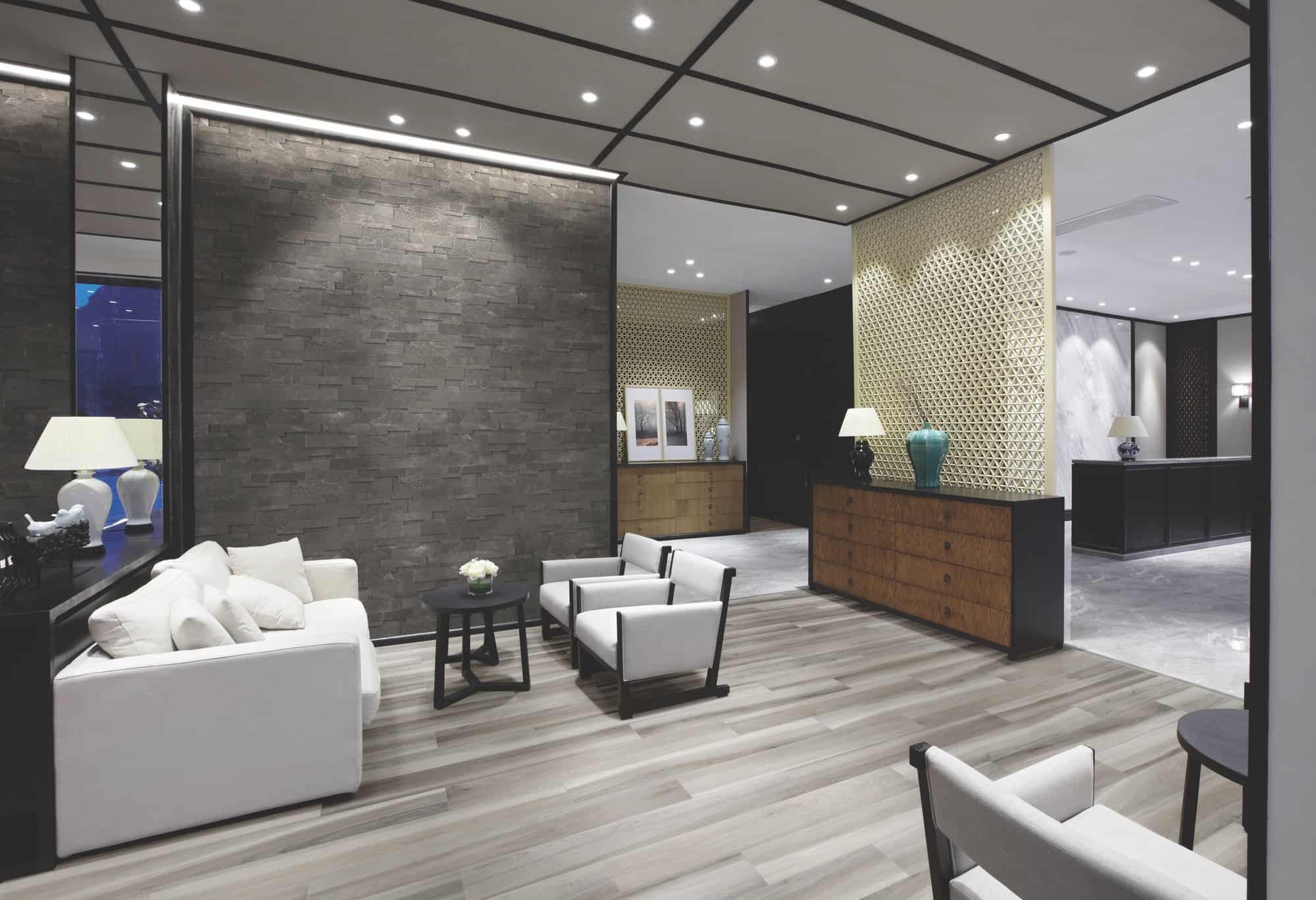
Tile Sizes & Patterns
Beyond material, the size and layout of your tile has a big impact on the overall look of a room.
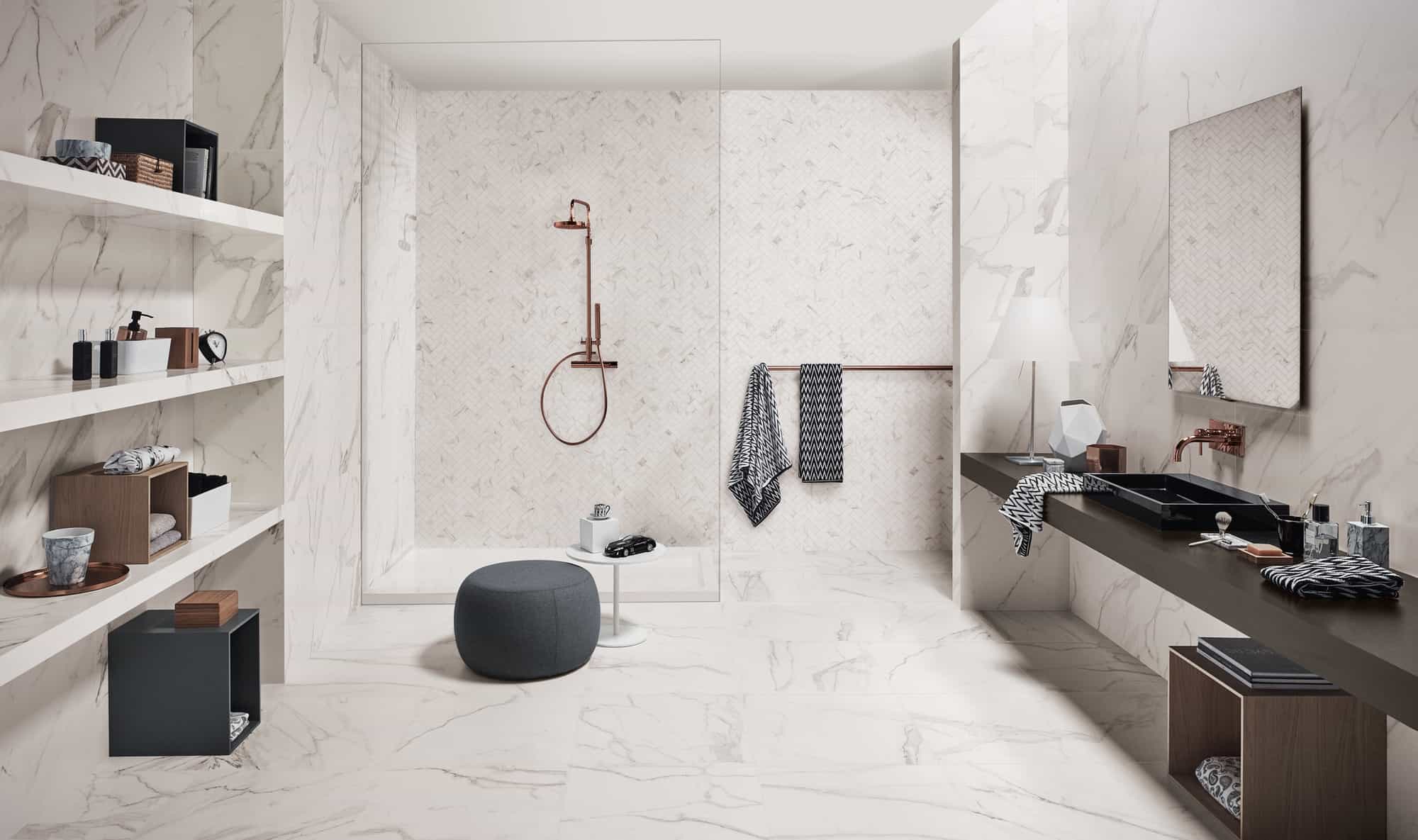
Large Format
Oversized tiles (12×24 and larger) create a seamless, modern look with fewer visible grout lines.
Best for:
- Open-concept living areas
- Modern and contemporary homes
- Making smaller rooms feel larger
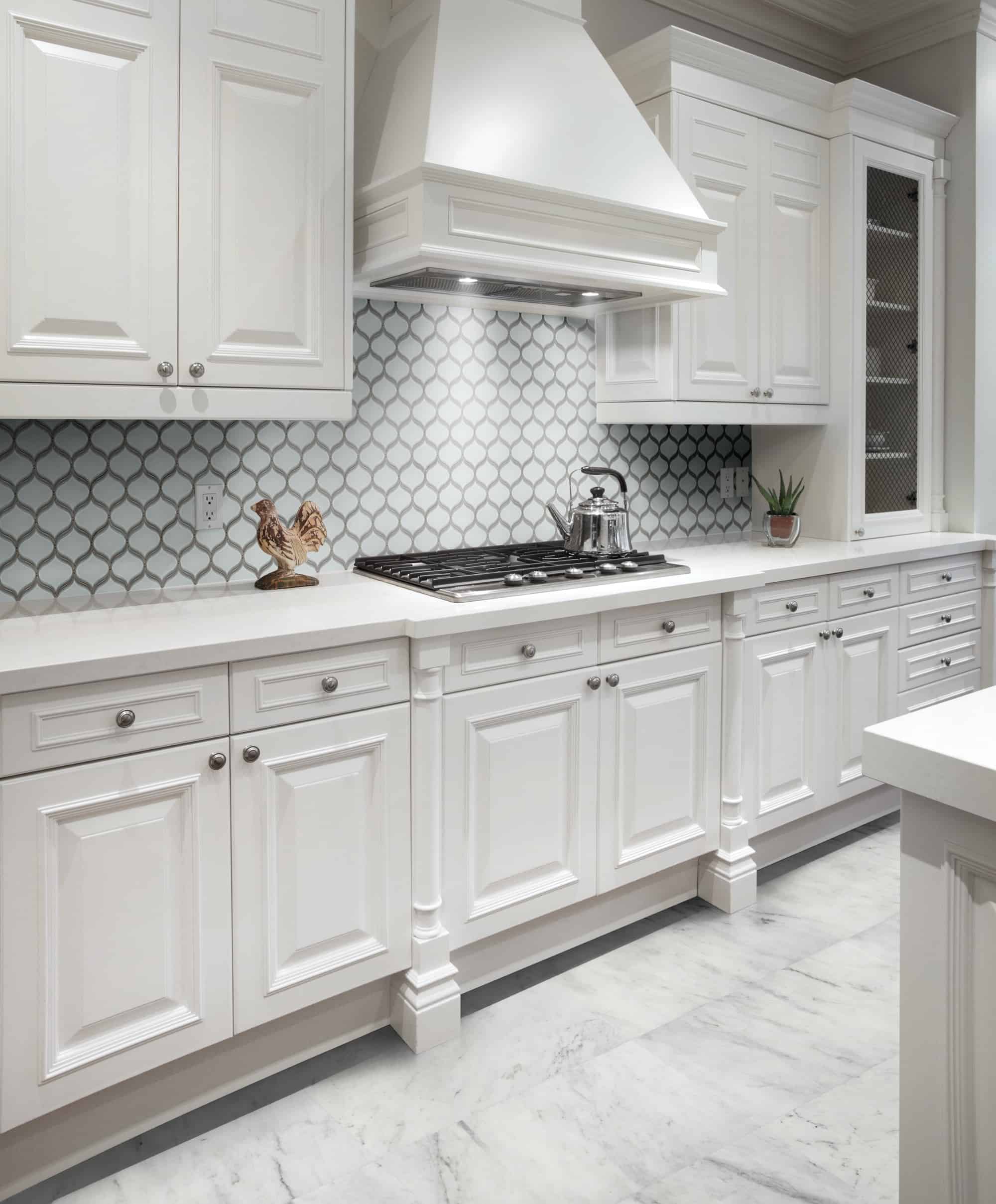
Mosaic
Small-format tiles arranged in sheets, perfect for detailed patterns and accent areas.
Best for:
- Kitchen backsplashes
- Shower niches
- Decorative accents
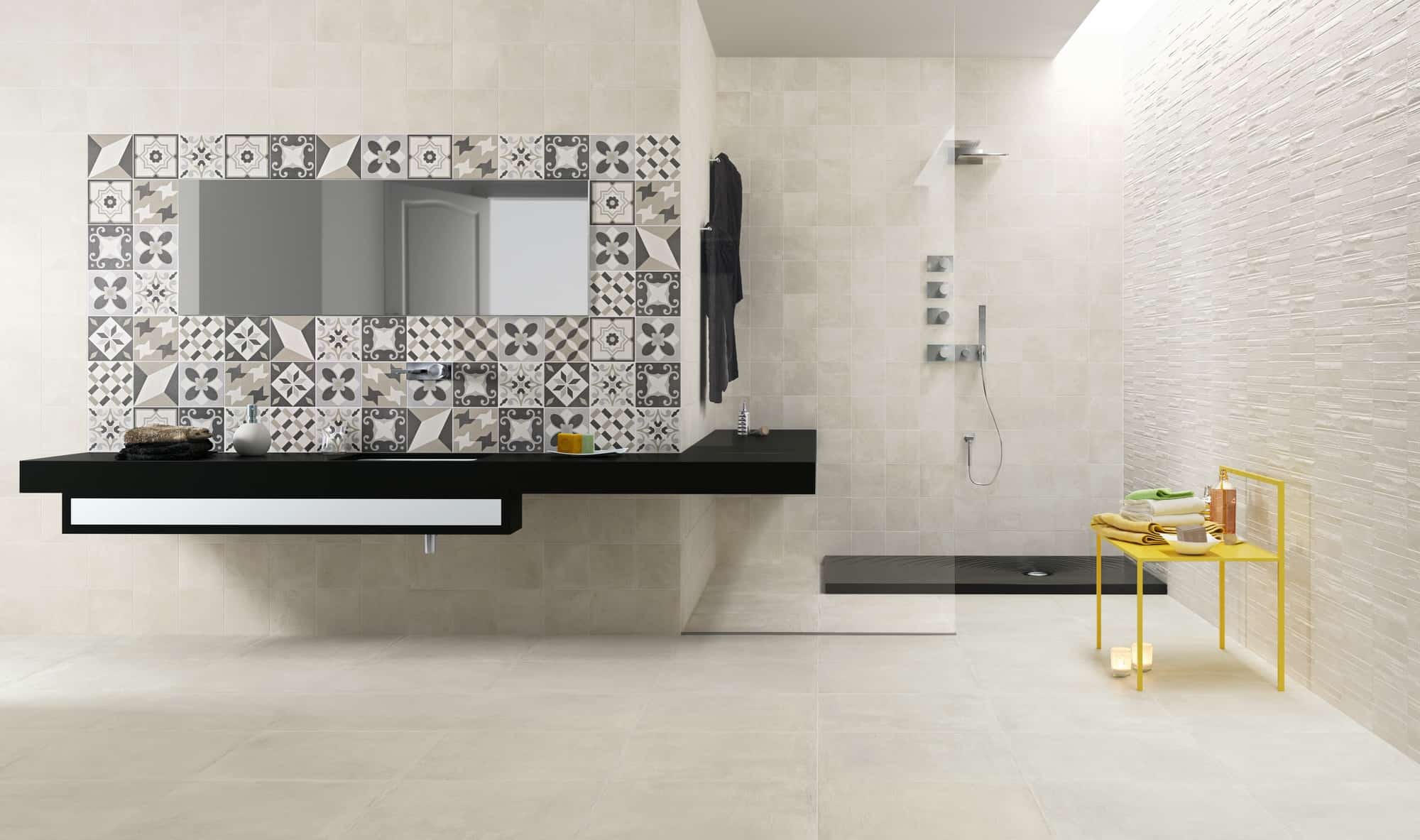
Patterned & Brick-Lay
Tile laid in decorative patterns like herringbone, brick-lay (subway), or basketweave for added visual interest.
Best for:
- Feature walls
- Entryways
- Statement floors
Comparing Ceramic, Porcelain & Stone
| Material | Water Resistance | Durability | Maintenance |
|---|---|---|---|
| Ceramic | Good | Good | Low |
| Porcelain | Excellent | Excellent | Low |
| Natural Stone | Varies by stone type | Excellent | Higher – requires sealing |
Tile & Stone Care and Maintenance
Tile and stone are both low-maintenance compared to many flooring types, but a little routine care keeps them looking their best for years to come.
Grout Care
Sweep or vacuum regularly and damp mop with a pH-neutral cleaner. Grout lines are porous, so resealing roughly every 1–2 years helps them resist stains and moisture.
Natural Stone Care
Natural stone should be resealed periodically — how often depends on the stone type and how much traffic it sees. Avoid acidic or abrasive cleaners, which can etch or dull the surface.
Signs It May Be Time to Reseal or Regrout
- Water no longer beads on the surface
- Staining appears more easily than it used to
- Grout looks worn, discolored, or is starting to crumble
Frequently Asked Questions
What’s the difference between ceramic and porcelain tile?
Porcelain is fired at a higher temperature for longer, making it denser, more durable, and more water-resistant than ceramic. Ceramic is generally more affordable and easier to cut and install.
Is natural stone tile hard to maintain?
Natural stone requires periodic sealing to resist staining and etching, but with routine care it can last for decades and only improves with age.
Can tile be installed in bathrooms and showers?
Yes. Porcelain and many natural stones are excellent choices for wet areas when properly installed and sealed.
How long does tile flooring last?
With proper installation, ceramic and porcelain tile typically last 10–20+ years, and natural stone can last even longer with regular sealing.
Does Design West offer free tile and stone estimates?
Yes — contact our showroom in Orem, UT to schedule a free, no-obligation estimate for your tile or stone project.
Family-owned since 1988
Ready for New Tile or Stone?
Visit our Orem showroom to compare tile and natural stone colors, sizes, and finishes in person, or request a free, no-obligation estimate. Our team will help you find the right tile for your home, lifestyle, and budget.
Also explore: Carpet · Hardwood · Luxury Vinyl Plank · Laminate · Flooring Installation
Open Hours
M-F: 10am - 6pm
Sat: 10am - 4pm
Closed Sunday
